
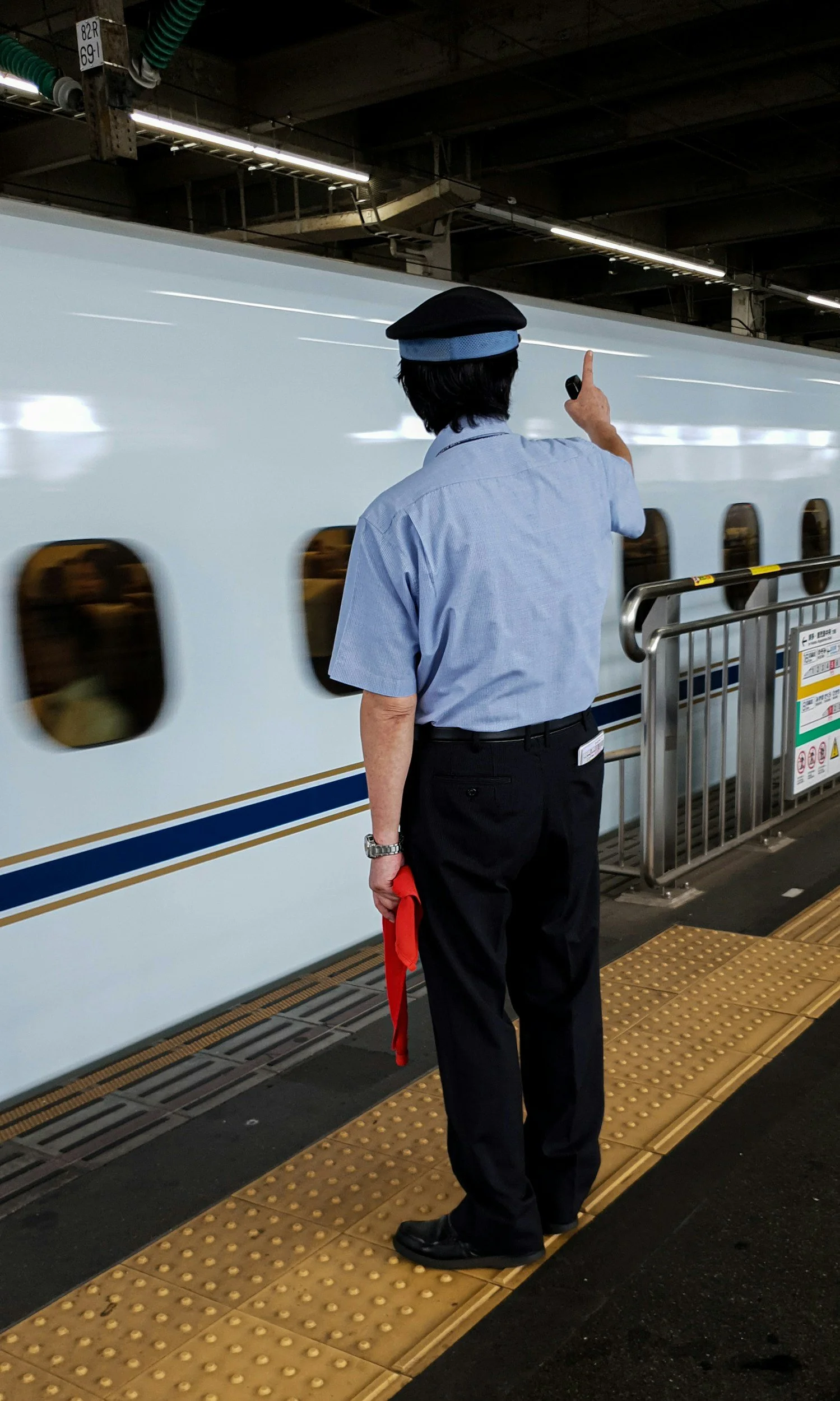
Why I Don't Advise Pre-Purchasing Your Japanese Shinkansen Bullet Train Tickets
Japan's train system runs so frequently that locking in Shinkansen tickets in advance can actually work against you. Here's why I tell almost every client to buy at the kiosk instead.
There's a moment that happens on almost every Japan trip.
My clients land at Narita or Haneda, bleary-eyed and buzzing with excitement. Their driver is waiting just outside of customs — or they grab a taxi or Uber — and Japan is finally in front of them. And somewhere on that ride into the city, the planning energy shifts — from preparation mode into pure anticipation.
I know what the internet told them before they got on that plane. Book in advance. Lock it in. Don't leave anything to chance. And I understand the impulse — Japan feels big and unfamiliar, and buying things ahead of time feels like control.
But here's what I've learned from booking over 100 Japan trips: buying individual Shinkansen tickets at the station kiosk isn't the backup plan. It's the actual plan.
And I'm going to tell you exactly why — starting with ramen.
The Scenario Nobody Warns You About
Picture this: you're finally in Tokyo. You've been dreaming about this trip for months. Your driver pulls up to Tokyo Station and you are ready. You've done your research. You know about Tokyo Ramen Street tucked into the B1 level of First Avenue Tokyo Station, and you've had your eye on Rokurinsha — the shop that put tsukemen (dipping ramen) on the map with its famously rich, super-thick broth — or maybe Soranoiro Nippon, a Michelin-listed spot serving shoyu ramen made with Amakusa Daio, Japan's largest local breed of chicken. You've been thinking about that bowl since you landed.
Except your driver hit traffic. And you pre-purchased your Shinkansen tickets on Klook.
Now you have ten minutes from the moment you step out of that car to get through the ticket gate, up to your platform, and on board. There is no time for ramen. There is barely time to breathe, let alone grab an ekibento (a train station bento box) for the ride.
That scenario? Completely avoidable.
What the Alternative Looks Like
Imagine arriving at Tokyo Station at the exact same time. Traffic was bad, but it doesn't matter. You have no ticket to catch.
You walk down to Ramen Street, settle into a seat at Hanamichian (two-time Michelin Guide Tokyo selection, known for their deeply rich miso broth and crispy bean sprout topping) or grab a bowl of Hirugao's delicate, all-natural salt ramen. You eat without rushing. You enjoy it.
When you're ready, you walk to the Shinkansen ticket kiosk. The interface has English. The screens are clear. The process is logical. You pick your route, your train, your seat, and you're done in a few minutes. You purchase reserved seats for a train 20 to 30 minutes out and head to the platform. On your way, you stop for a seasonal ekibento, some Shinkansen ice cream from the vending machine, or a coffee to sip while you watch the train pull in perfectly on time.
That is what a Japan trip is supposed to feel like.
Japan's Train System Is Not the Thing to Fear
This is the part that surprises first-timers most. The kiosks have English. The process is logical. Station staff are genuinely helpful if you get turned around. The whole experience is remarkably low-stress once you're standing in front of the machine.
And the frequency? On the Tokyo to Kyoto/Osaka corridor, Shinkansen trains depart every 10 minutes or so. That means missing one train costs you almost nothing. The next one is right behind it. Yes, a specific train might sell out — but reserved seats are very reasonably priced, easy to select at the kiosk, and you're rarely waiting long.
Your Itinerary Will Shift. It Always Does.
Maybe you linger longer in Kyoto than you planned. Maybe you decide to spend an extra afternoon in Tokyo before heading south. Maybe the group is moving slower on day three, and the 9 a.m. bullet train you pre-booked now feels like a punishment.
When you've locked in advance tickets, you're locked in. Change fees, rebooking hassles, the mental weight of a schedule you've already started to resent — none of that is how you want to spend your Japan trip.
When you buy at the kiosk, you move when you're ready. That flexibility isn't a small thing. For first-time travelers especially, it's the difference between a trip that flows and a trip that fights you.
When I Do Recommend Pre-Purchasing
There are a handful of times each year when I'll actually advise locking in tickets ahead of time:
Christmas through January 2nd (the New Year holiday travel surge)
Golden Week (late April through early May)
Silver Week (the September holiday cluster)
Possibly hanami season if you're traveling between popular sakura cities at peak bloom
During these periods, trains fill up in a way that's genuinely different from a normal travel day. If your trip falls during one of these windows, I'll flag it and we'll plan accordingly. Klook and SmartEx are both reliable platforms for advance purchases when it makes sense. And if you're someone who genuinely needs a structured schedule, that's okay too — I'm always happy to help.
The Kiosk Moment Is Actually a Good One
I've heard from so many clients that buying their first ticket — standing there, navigating the screen, watching the ticket print out — was one of those small, quiet confidence-builders that set the tone for the whole trip.
Japan is designed for visitors. The train system is part of that. Trust it.
You don't have to figure it all out before you leave home. Some of the best parts of a Japan trip are the ones you leave a little room for.
Buy your ramen first. Get your ticket after.
That's the move.
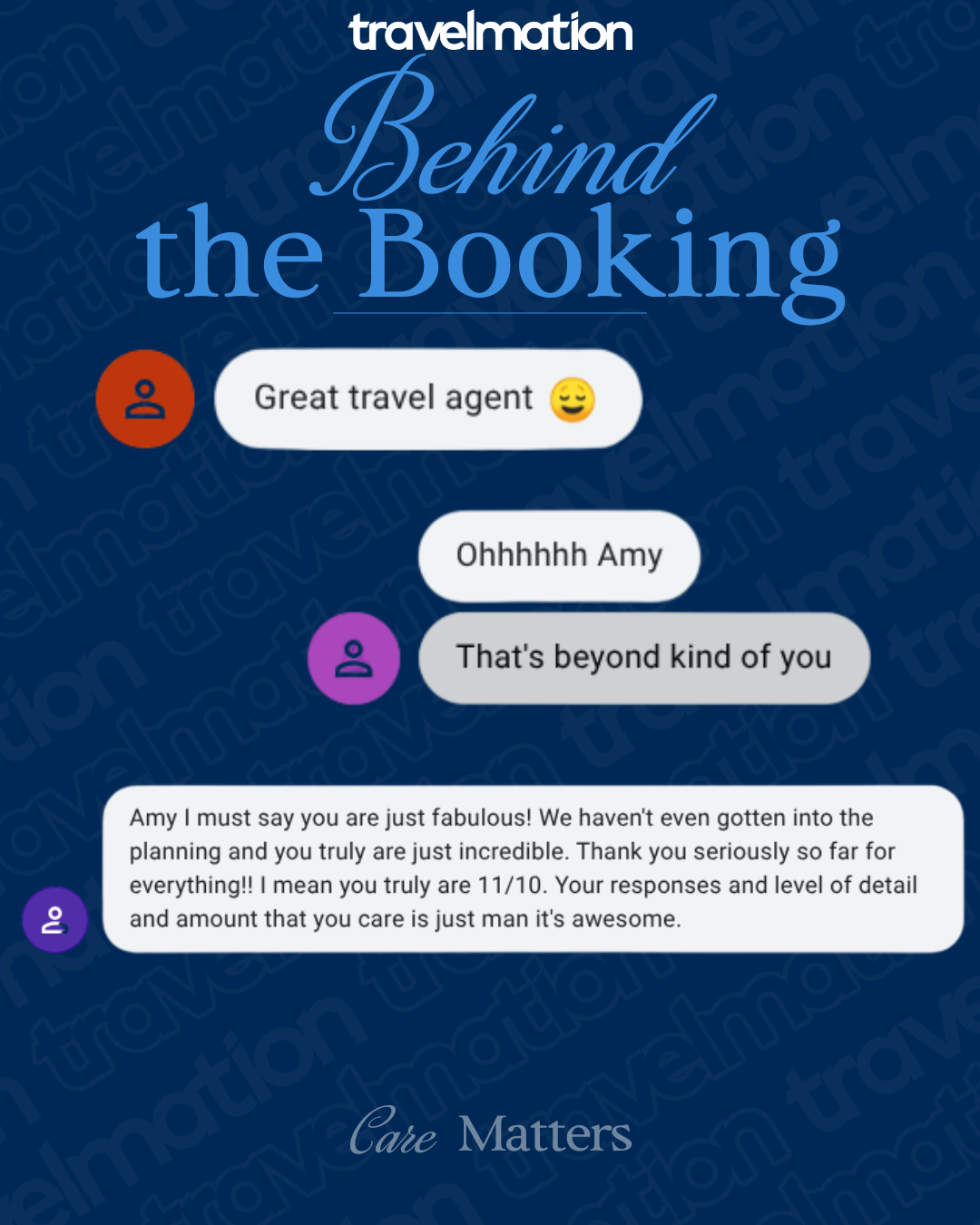
Behind the Booking: What You Don’t See When You Work With a Professional Travel Advisor
What really happens behind the scenes when you work with a professional travel advisor? Client reviews and social media posts only tell part of the story. This post shares real examples of the judgment, care, and problem-solving that happen long before a trip begins.
“Don’t believe everything you read on the internet.”
— Abraham Lincoln (Not really.)
This post explains what actually happens behind the scenes when you work with an experienced travel advisor — especially when plans change, availability disappears, or online information causes confusion.
Care matters — even when no one is watching.
What you see online isn’t always reality.
Client reviews are only a fraction of what’s happening. “Just booked” posts don’t even scratch the surface of the work happening behind the scenes.
As a professional travel advisor, much of what I do never makes it into a review, a social media post, or a highlight reel. And yet, that unseen work is often what protects a trip, preserves a budget, or eases a client’s anxiety long before travel begins.
Here are three real situations from the last twelve hours that illustrate what behind the booking actually looks like.
Behind the Booking: Real-Time Problem Solving
One client is traveling to Japan to visit her son, who is attending college there. She happens to be in Tokyo on the Emperor’s Birthday.
If you know Japan, you know holidays matter.
If you really know Japan, you know the Emperor’s Birthday is a major event. It’s the only day of the year the public can enter the Imperial Palace, which means people from across the country flock to Tokyo. Hotels sell out quickly, prices surge, and availability disappears fast.
I had three rooms in my cart on three separate occasions. I wasn’t fast enough.
She also has a strict budget — completely understandable. Most travel agents wouldn’t even know this holiday exists, let alone how significantly it impacts hotel availability. As an Advanced Master Japan Travel Specialist, these are exactly the kinds of details I monitor because they can make or break a trip.
We searched everywhere. Breakfast included. Two rooms available. Not near the Imperial Palace. Within budget.
When inventory ran out, I called in a favor through contacts I’ve built in Japan — something that takes time, trust, and relationship-building as an American advisor. I found a solution that made the trip possible, even though it wasn’t something I could book directly myself.
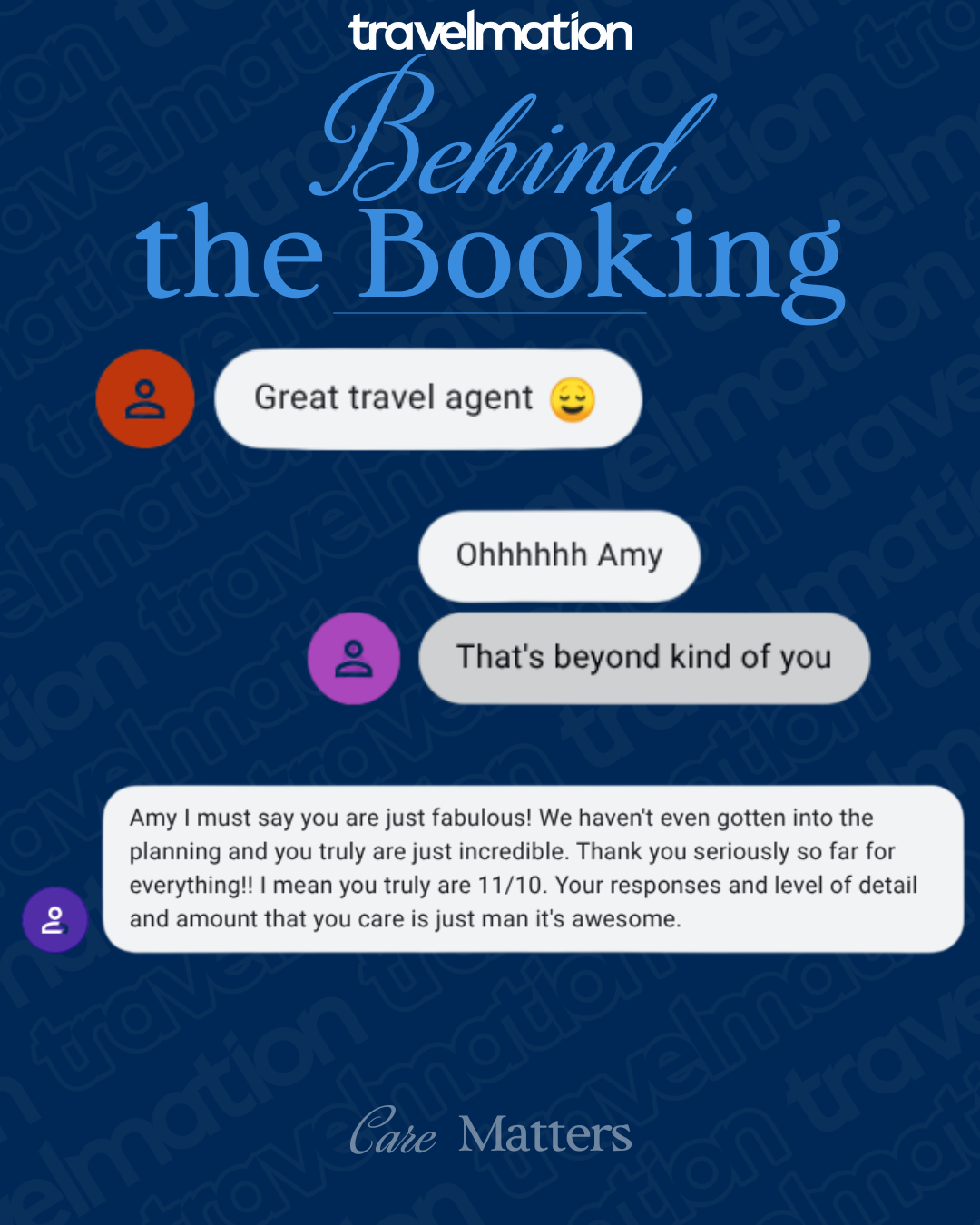
Her response said it all: “That’s beyond kind of you.”
Behind the Booking: Client Care That Never Becomes a Post
Another traveler is a repeat client of mine who is leaving for a cruise in a couple of days. He’s in his mid-twenties and travels solo.
I was texting with him at 5:30 a.m. when he arrived at the airport — not because I had to, but because I wanted to make sure he was okay. Travel can feel very different when you’re young and alone, and sometimes a simple check-in makes all the difference.
His message afterward: “Great travel agent.”
On its own, it’s not the kind of moment that usually becomes a post. And that’s the point.
Behind the Booking: Context, Judgment, and Calm
A third client is traveling later this year and reached out feeling anxious after seeing viral videos online about passports being flagged or canceled without warning.
So I did what I always do.
I researched. I evaluated credibility. I looked for official sources, patterns, and context. I explained what was known, what wasn’t, and how I assess risk professionally — then helped calm her fears.
Her response: “I mean you truly are 11/10. Your responses, your level of detail, and the amount that you care — it’s just… awesome.”
And we haven’t even started planning her trip yet.
This isn’t a brag. It’s all about context and behind-the-scenes action.
I don’t share these examples to brag. I share them to provide context.
Online reviews matter — but they are incomplete by nature. One negative review can outweigh dozens of positive experiences simply because dissatisfaction is more likely to be voiced publicly. Getting people to leave reviews, especially after a smooth, uneventful trip, is often surprisingly difficult.
We live in a world where online research is the first step for almost everything. With AI and algorithms amplifying content, that will only become more true. But visibility does not always equal accuracy.
I approach hotels the same way I approach my own business. I read reviews carefully and look for patterns. A handful of complaints among hundreds of stays? That’s normal. A consistent decline over time? That’s a red flag, and I don’t book red flags.
Context matters.
The Work You Don’t See
Travel planning isn’t just about booking flights and hotels and sending someone on their way. It’s about judgment, experience, timing, and care — much of which happens quietly and long before a trip begins.
I’m not a people pleaser. I’m a people helper, almost to a toxic level. Clients, other agents, people in my community. I can’t help it, and have no reason to fight it. It’s in my DNA.
I care deeply about the travelers I work with and about doing this work well. That commitment shows up in ways that aren’t always visible online — but it’s there, every day.
Thinking About Your Next Trip?
If you’re considering travel and want an advisor who pays attention to the details, evaluates information thoughtfully, and takes your experience seriously, I’d love to help.
You can start by submitting a quote request through my website, and we’ll take it from there — thoughtfully, carefully, and with your best interests in mind.

Japan’s “New” Departure Tax: What’s Actually Happening (and Why the Panic Is Overblown)
Japan’s proposed departure tax increase is making headlines—but it hasn’t been adopted or implemented. Here’s what travelers actually need to know, what it would cost, and why the online panic is overblown.
If you’ve been scrolling Facebook or watching travel videos on TikTok lately, you may have seen alarming headlines about Japan’s so-called “new” departure or exit tax — with claims that it will burden travelers, drive people away, or dramatically increase the cost of visiting Japan. Many of these headlines refer to a supposed Japan departure tax increase, often called a “Japan exit tax,” despite the fact that no new policy has been implemented.
Let’s slow this down — way down — and talk about what’s actually happening. Because much of what’s being shared right now is sensationalized, incomplete, or simply premature.
As a travel advisor and Advanced Master Japan Travel Specialist who closely monitors policy changes that affect travelers, I want to clarify what’s actually happening.
TL;DR:
Japan has not adopted or implemented a new departure tax. The proposed increase would raise the existing tax by approximately $12.84 per traveler, would be included in airfare, and would help fund tourism infrastructure improvements. Much of the current online panic is premature and overstated.
First Things First: This Tax Increase Has Not Been Adopted
This is the most important point — and the one many posts conveniently leave out.
Japan has not officially adopted or implemented a higher departure tax.
What’s being discussed in the media is a proposal to increase Japan’s existing international departure tax from 1,000 JPY to 3,000 JPY as part of a future fiscal reform package, potentially tied to fiscal year 2026.
That means:
There is no new tax in effect
There is no confirmed implementation date
Travelers are reacting to something that does not yet exist
Despite that, articles and videos are being shared widely as though this change is already impacting travelers today — which simply isn’t true.
Even If It Is Adopted, Let’s Talk About the Actual Cost
Japan’s current departure tax is 1,000 JPY per person. The proposed increase would bring it to 3,000 JPY.
That’s a difference of 2,000 JPY, which equals approximately $12.84 USD per traveler.
Let’s put that into perspective.
If the average traveler is spending $3,000 or more on a 7–10 day trip to Japan — including flights, hotels, transportation, food, and experiences — a $12.84 increase is minor when compared to the typical expenses associated with international travel.
And it’s worth noting:
You Don’t Pay This Separately
Japan’s departure tax is included in your airline ticket price.
There is no payment booth. No airport surprise. No extra step on departure day. Most travelers will never even notice the difference.
Where the Money Goes (and Why That Actually Matters)
Japan introduced its international tourist tax to fund tourism infrastructure and sustainability initiatives, not to discourage travel.
If the increase is adopted, the revenue would be used to:
Improve transportation and tourist services
Address congestion in high-traffic destinations like Kyoto, Nara, and Tokyo
Enhance crowd control and waste management
Mitigate the environmental impact of mass tourism
Support tourism development beyond the Golden Route
In 2024 alone, the departure tax generated more than 52.5 billion yen — roughly $339 million USD — money that directly supports maintaining the quality, safety, and livability of the destination.
In other words, the goal is to support the systems that make travel in Japan efficient, safe, and enjoyable.
The Part No One Is Talking About: Tax-Free Shopping
There’s another piece missing from most of these viral posts.
Tourists in Japan benefit from tax-free shopping, allowing them to avoid the 10% Japanese consumption tax on qualifying purchases.
Here’s how it works:
Purchases over 5,000 JPY (approximately $32 USD) qualify
Items must be taken out of Japan
Consumables must remain sealed until departure
For travelers who shop — skincare, souvenirs, snacks, gifts — the savings add up fast.
In many cases, travelers save far more than $12.84 through tax-free purchases alone, effectively offsetting the proposed departure tax increase entirely.
The Bottom Line: What Travelers Actually Need to Know
Right now, social media is reacting loudly to something that:
Has not been adopted
Has not been implemented
Would amount to a $12.84 difference per traveler
Is bundled into airfare
Helps fund improvements that benefit travelers directly
This is a perfect example of how travel news can become distorted once it hits short-form content and viral headlines.
Japan remains one of the most extraordinary destinations in the world — and thoughtful planning means understanding context, not panic posts.
If and when this change becomes official, travelers will be informed clearly and accurately. Until then, it’s important to separate facts from fear.
Frequently Asked Questions About Japan’s Departure Tax
Is Japan raising its departure tax?
Japan has proposed an increase to its departure tax, but it has not been officially adopted or implemented at this time.
How much is Japan’s departure tax?
Currently, Japan’s departure tax is 1,000 JPY per traveler. The proposed increase would raise it to 3,000 JPY, which equals roughly $12.84 USD.
Is the Japan departure tax paid at the airport?
No. Japan’s departure tax is included in the cost of an international airline ticket and is not paid separately at the airport.
Who would the Japan departure tax apply to?
Japan’s international departure tax applies to all international travelers departing the country, regardless of nationality, if and when any changes are implemented.
Why is Japan considering a departure tax increase?
The proposed increase is intended to fund tourism infrastructure improvements, address congestion at high-traffic destinations, and support sustainability efforts across Japan.
How to Show Appreciation in Japan—Without Offending Anyone
As a travel advisor, I get a lot of questions about tipping in Japan.
Here’s the answer:
You don’t. Not normally at least.
And once you understand why—you’ll start to understand how Japan works.
Because this isn’t just about money.
It’s about respect, community, and the quiet beauty of doing your part without expecting anything in return.
Tipping Is Everywhere in the U.S.
Let’s be honest—tipping culture in America is out of control.
The Starbucks barista gets a tip.
The person who makes my sandwich at Subway? Tip.
Orange Leaf, where I pour my own frozen yogurt and add my own toppings? Tip screen.
Carryout meals. Some drive-thrus. DoorDash, Instacart, Uber.
It’s all around us.
So when I tell clients not to tip in Japan, they’re often shocked. But in Japan, tipping isn’t expected. It’s not customary. And in many situations—it’s actually inappropriate.
Japan is a Collective Society
In Japan, the focus isn’t on the individual—it’s on the group. People grow up believing that their role in society matters, and that doing your part—quietly, respectfully, and thoroughly—is how everyone thrives.
That’s why public spaces are spotless. That’s why people don’t speak loudly on trains. That’s why you’ll see schoolkids helping clean their classrooms.
Service is done well because it’s supposed to be. Not because someone is hoping for a tip.
Why Tipping Feels Out of Place
In Japan, good service isn’t “above and beyond”—it’s the norm. Leaving money behind can actually make things uncomfortable. Some staff will chase you down to return it, thinking you forgot your change.
It’s not rude. It’s just not how appreciation is expressed.
What to Do Instead
I always tell my clients: It’s not about the money—it’s about the thought. A small gesture or trinket means much more than yen.
Here’s what works better:
Say thank you in Japanese. “Arigatou gozaimasu” goes a long way.
Bring a small gift from home. Think candy, magnets, or Trader Joe’s tote bags (yes, seriously—they’re wildly popular).
Leave a kind review. It supports the business without creating discomfort.
This Goes Beyond Tipping
Once you understand this, everything else in Japan starts to click.
Why you take your shoes off at someone’s home or ryokan
Why people bow instead of shaking hands
Why restaurants don’t rush you out even when they’re full
It’s not about strict rules. It’s about moving through shared space with respect. And when you get that right, the whole trip flows differently.
Final Thought
Japan isn’t a country where you flash your wallet to say thank you. It’s a place where the smallest gestures carry the most meaning.
So if someone goes out of their way for you in Japan, don’t feel like you have to tip them. I know—as an American—it’s hard to get out of that mindset!
Say thank you. Offer a small gift. Carry yourself with quiet respect.
That’s how you leave a mark in Japan…without leaving anything behind.
Americans Buy Souvenirs. Japanese People Buy Omiyage.
Same suitcase space. Completely different meaning.
One says “Look what I did.”
The other says “I didn’t forget about you.”
If you’re traveling to Japan, there’s one cultural tradition that might surprise you—not because it’s flashy, but because it’s quietly thoughtful: Omiyage (お土産).
It doesn’t just mean “souvenir.” It means “a gift from the land.” And the meaning behind it is deeper than it sounds.
omiyage from a Japanese truck stop
So What Is Omiyage?
Omiyage are thoughtful gifts travelers bring back to family, friends, coworkers, or anyone whose lives they briefly stepped away from during their trip.
It’s not about picking something random. It’s about bringing something specific from the region you visited—usually a local specialty or regional treat (called meibutsu).
Think:
Yatsuhashi cinnamon mochi from Kyoto
Momiji manju (maple-leaf cakes) from Hiroshima
Shiroi Koibito cookies from Hokkaido
These aren’t souvenirs for you. They’re thank-you gifts for the people who stayed behind.
Why It Matters
Japan is a collectivist society, where the group often takes priority over the individual. When you take time off—whether for vacation or work—it’s customary to acknowledge the impact that had on others.
Omiyage is a gesture of gratitude and respect:
“Thank you for covering my shift while I was gone.”
“Thank you for supporting me while I traveled.”
“Thank you for being part of my life.”
Even children bring omiyage to their teachers after family trips. Businesspeople bring them back to their entire office. It’s not a burden—it’s an honor.
Omiyage Tips for Travelers
Visiting Japan? You don’t have to bring omiyage home—but understanding the spirit of it will help you travel more thoughtfully.
If you do want to try:
Look for beautifully packaged snacks at train stations or stores. Even the airport!
Choose items that are unique to the area you visited
Go for individually wrapped treats (makes sharing easier)
And don’t eat your omiyage before you get home—it's not a souvenir for you!
What to Do Instead of Tipping
Japan doesn’t run on tipping—it runs on thoughtfulness.
So when you receive exceptional service and really want to tip, skip the cash. Instead, I tell my clients to bring:
A small trinket from home
Your favorite local candy or snack
A fun magnet or postcard
Canvas bags from Trader Joe’s — yes, really. They’re a quiet status symbol in Japan, and they fold up perfectly into your luggage.
It’s not about the value. It’s about the gesture.
A thoughtful token from your daily life means far more than a few coins ever could.
Final Thoughts
Omiyage isn’t about obligation. It’s about connection.
In Japan, even a cookie can say:
“You mattered to me—even while I was away.”
And in a world that moves fast and travels far, that kind of thoughtfulness is worth carrying home.
How To Forward Your Luggage In Japan
Traveling to Japan is an unforgettable experience, but traveling with luggage can be memorable - and not always in a good way!
Dragging a fifty-pound suitcase through Japan's bustling train stations is not my idea of an enjoyable experience. There's also another issue to consider with your luggage while traveling: space on the trains. Most train cars lack sufficient room for full-size suitcases, and you'll need to purchase a special train ticket to access the designated storage area. Carry-ons and backpacks are manageable since there's overhead space and room at your feet. So, how can you navigate this?
Luggage forwarding!
Luggage forwarding, referred to as takkyubin, is a convenient service that enables you to transport your bags from one place to another, such as from one hotel to another or to the airport. While it may seem unfamiliar to Americans, it is a common practice in Japan, utilized by both locals and tourists, and is recognized for its reliability and efficiency.
This service typically requires 24-48 hours, but it might take longer during peak tourism periods like Cherry Blossom season or Golden Week. Therefore, advance planning is essential. Please check with your hotel front desk regarding the cut-off times for luggage drop-off.
Benefits of Luggage Forwarding
Travel Light: Enjoy sightseeing without lugging around heavy suitcases.
Convenience: Your bags are delivered to your next destination, allowing you to explore freely.
Reliable & Secure: Japanese logistics companies are known for their punctuality and professionalism.
Same-Day or Next-Day Delivery: Depending on the location, delivery can be as fast as the same day or the next day.
How to Use Luggage Forwarding Services
Prepare Your Luggage
Ensure your luggage is securely packed.
Some services may have size and weight restrictions, so check in advance.
If sending to an airport, confirm your flight details and allow enough time for delivery.
Fill Out the Shipping Form
At your hotel front desk, you’ll need to fill out a form with:Your name and contact details
Delivery address (hotel, airport, or home address)
Desired delivery date
Payment details (Japanese yen, but some hotels accept credit cards for this service)
Pick Up Your Luggage at the Destination
Your luggage will be delivered to the specified location within the stated time-frame. Most hotels will hold your bags until your arrival.
If you’re looking for a convenient luggage transfer service within Tokyo or Osaka/Kyoto, Airporter is a lovely option. Feel free to click these links and see what it’s all about!
Conclusion
Luggage forwarding is an absolute game-changer for those wishing for a hassle-free experience when changing hotels and cities. Consider using this for your own trip to make your journey even smoother. And if you need help planning your own trip to Japan, let me know - I’m always happy to help and here to serve!
Why I Don’t Use Tour Operators or Destination Management Companies for Japan Trips
If using a Tour Operator (TO) or Destination Management Company (DMC) makes booking easier for travel agents and even increases their earnings, why don’t I use them? I have several reasons!
I Want My Clients to Have Freedom of Choice
When planning a trip, flexibility is everything. Take Tokyo, for example—the world’s largest city. One TO/DMC I researched offered just 25 hotel options in the entire city. In Yokohama, Japan’s second-largest city, there were only two. Meanwhile, when booking independently, I had access to over 3,000 hotels for the same dates! Why limit my clients when there are so many incredible options?
I Take Full Responsibility for Your Trip
When you choose me as your travel advisor, we’re establishing a business relationship that doesn’t end once your trip is booked. I want you to feel comfortable calling me—not a call center—if something happens during your trip. I don’t just send you on your way and hand you off to someone else. If an issue arises, I’m here to help, every step of the way.
It’s Never Been in My Clients’ Best Interest Financially
I’ve never found a TO or DMC to be the most budget-friendly option for my clients. Let’s look at a real example:
For a two-week Golden Route trip in November 2025, I compared pricing between a TO/DMC and my own customized booking process. Here’s what I found for two people flying economy from Nashville, TN:
With a TO/DMC

2 roundtrip economy flights: $4,636
Shared (not private) airport transfer: $496
5 nights at Hilton Tokyo: $3,637
Private 8-hour Tokyo tour: $932
2 nights at Kinnotake Sengokuhara: $5,651
3 nights at Miyako Hotel Kyoto Hachijo: $1,660
4 nights at Shibuya Excel Tokyo: $2,259
Private hotel-to-airport transfer: $315
Total Cost: $19,586
Booking It Myself
2 roundtrip economy flights packaged with 5 nights at Hilton Tokyo: $5,772 ($2,501 savings!)
Private airport-to-hotel transfer: $149 ($347 savings!)
Private 8-hour Tokyo tour: $413 ($519 savings!)
2 nights in a Presidential Suite at Kinnotake Sengokuhara: $5,438 ($213 savings!)
3 nights at Miyako Hotel Kyoto Hachijo: $1,065 ($595 savings!)
4 nights at Shibuya Excel Tokyo: $1,884 ($375 savings!)
Private hotel-to-airport transfer: $149 ($166 savings!)
Total Cost: $14,870 ($4,716 in savings!)
Even if you factor in my planning fee, my client still saved over $4,000—and that’s before considering that I could have chosen from thousands of hotels, not just the 25 that were available through the TO/DMC.
The Bottom Line
I have no issue with travel agents who use TOs or DMCs—I completely understand why they do! If I weren’t deeply familiar with certain destinations or if I didn’t love crafting custom trips like a mix of Jenga and Tetris, I might do the same. Plus, let’s be real—using a TO/DMC would mean I could make much more money.
But honestly? Nothing brings me more joy than building trips from the ground up and guiding my clients through every stage—from our first Zoom call, to selecting activities with my assistant Alex, to the predeparture call, to the moment they tag me in their amazing travel photos. Knowing that my work helped create lifelong magical memories? That makes it all worth it.
Annyeonghaseyo!
I’m always looking for ways to expand my expertise and better serve my clients. Over time, I’ve noticed a growing trend—many of my clients end their Japan trips with a visit to Seoul or other parts of Korea. Seeing this, I knew it was the perfect opportunity to learn more about this incredible destination.
After diving into extensive training, I’m proud to announce that I am now a Certified Korea Travel Specialist through the Korea Tourism Organization! This means I can confidently assist you in planning an unforgettable trip to Korea, whether it’s an add-on to your Japan adventure or a standalone journey.
From the vibrant streets of Seoul and the serene beauty of Jeju Island to the rich history of Gyeongju, I’m here to craft an itinerary that perfectly matches your travel style. Let’s turn your dream trip to Korea into reality!


Why should you use a travel agent for your trip to Japan?
So you’ve decided to travel to Japan - how incredibly exciting!
But also, how incredibly overwhelming!
Between the cultural differences, incredibly developed transportation systems, language barrier, and the fact that Tokyo is the size of Delaware, planning a trip to Japan can certainly be a challenge. While DIY planning is possible, here’s why hiring a travel agent—especially one with extensive experience—can make all the difference.
Expert Knowledge and Insider Tips
Did you know that I’ve booked over 70 trips to Japan in the last couple of years and hold an Advanced Master Japan Travel Specialist certification? I’m also a certified Luxury Travel Advisor and Group Travel Advisor with multiple certifications from airlines, tour operators, and hotels worldwide. This gives me insider knowledge on when to visit (avoid Golden Week!), must-see attractions, and hidden gems like a quaint ramen and gyoza shop in Asakusa. Instead of relying on generic online guides, I offer personalized recommendations that make your trip truly special.Stress-Free Planning with Freedom-Of-Choice
With over 4,000 hotels in Tokyo, 47 prefectures to explore, and the most sophisticated train system in the world, Japan can be daunting for first-time and repeat travelers alike. I create custom itineraries that maximize your time without unnecessary backtracking. You’ll have full freedom to choose your hotels, activities, and transportation, ensuring a trip that matches your preferences while still benefiting from my expertise. In fact, I want you to be involved in the decision-making process!Custom FIT Trips versus Tour Operator or DMC Trips
Many travel agents rely on Tour Operators (TOs) or Destination Management Companies (DMCs) to handle bookings, often resulting in pre-packaged trips with limited choices and extremely marked-up prices. While this approach is convenient, I take a different route—I personally design fully customized trips for each client. Thanks to my strong relationships with vendors and Japanese properties, I can secure the best rates and experiences while offering complete flexibility in your itinerary.Personalized Service and Special Requests
Do you have a food allergy or special accommodation that needs to be taken into account while you’re traveling? Me and my team ensure that everyone who is involved with your reservations in Japan knows about it! Want a special bottle of wine, dessert, or flowers in your room for a special occasion? We can absolutely make that happen! Want to propose in a Japanese garden or in front of the Tokyo SkyTree while on a guided tour? No problem!In-Destination Support and Peace of Mind
Unlike many travel agents, I provide direct in-destination support. I have a separate phone for my clients traveling in Japan—it never gets turned off and is always within reach, even overnight. With the 14-hour time difference between Indiana and Japan, I make sure you have a direct lifeline in case of any unexpected issues, rather than leaving you to navigate a Tour Operator or DMC (see #3) call center.Saves Precious Time and Reduces Stress
Japan requires a lot of research and planning. When you book with me, you don’t have to figure out which of the 23 Tokyo wards to stay in, how to navigate the Shinkansen system, or when to leave your hotel to catch your flight home. Before your trip, we’ll have a detailed call where I walk you through your itinerary, share essential travel tips (like bringing a bag for trash!), and answer all your questions so you feel fully prepared.
Japan is an incredible destination, and planning your trip shouldn’t be a source of stress. Let me handle the details so you can focus on enjoying every moment. With my expertise, personalized service, and 24/7 support, all you need to do is pack your bags and get ready for an unforgettable adventure!
Magic Awaits!
Did you receive Magic Awaits, my Monthly Travel Newsletter? I covered hot summer travel trends, things travel agents can book that may surprise you, and featured a very magical holiday to Japan. Click below to subscribe to next month’s email!

How I Became A Travel Agent
My first “business card” - April 2022
May 8, 2021 - The day I told my nephews and kids that they were going to Disney.
March 17, 2022 - The day I loaded them on a plane and headed to Orlando.
It all began as a bit of “revenge travel” - a desire for my brother and I to take our boys on our first family vacation and for them to experience Florida for the first time. After we decided, I went into super planning mode. I read ALL the blogs and looked at ALL the Facebook pages. I ended up on the Disney side of TikTok, commonly known as DisTok. I made us a crazy hour-by-hour itinerary for the entire time we were gone. We had dining reservations, park reservations, a plan for Genie Plus - I did it all!
While I was on the trip, there was something missing for me. I realized that I actually missed the planning part! I had spent so many months researching, booking, and planning — and I realized that I enjoyed it! While I was still in Florida, I called an agent friend of mine and told her I thought I may be crazy but that I was thinking I may be able to do what she does. Instead of talking some sense into me, she did quite the opposite - she encouraged me! After years of serving in healthcare and corporate retail as an executive secretary (who also used to book travel!), my organizational skills were perfect. Additionally I had owned a direct-sales business for many years, giving me the marketing and entrepreneurial know-how I needed to get my travel business off the ground.
I had an absolute disaster of a trip home. After sitting on the MCO runway for over 3 hours with my two small children, we deplaned and never got back on. I had no idea that flight delay and eventual cancellation was giving me real-life experience for what would be my career! After returning back home on April 3, 2022, I began the process of what would seriously change my life!
On April 20, 2022 I signed my contract and began my training with Travelmation. I had an initial goal of booking $10,000 in travel. Boy, I had NO idea what my potential was, and I also had NO idea what I had gotten myself into!
After a lot of grit and hard work, I booked almost $16,000 in travel that first year and made just enough money basically to get my hair done a few times and go out for a coffee. And then I went to our annual retreat at Walt Disney World Resort in January 2023 - and my entire life changed!

I didn’t choose to specialize in Japan - Japan chose me!
Due to the COVID-19 pandemic, Japan kept their borders closed for most international travelers until the end of 2022.
In Fall of 2022, I had a friend reach out about planning a 3-week honeymoon to Japan. This was right after they opened their borders back up. I had never booked a trip to Japan before; heck, no one had booked it for years! I dove into learning as much as I could as quickly as I could. I truly wish I could go back and rebook that first trip (or even the first ten trips!) because I would do them very differently!
After that sweet couple traveled to Japan in March 2023, I started posting about Japan trips on TikTok. The requests started coming in. I received my Advanced Master Japan Travel Specialist certificiation in May 2023, and the requests REALLY started rolling in! Again, I never necessarily wanted to specialize in Japan travel. It just kind of happened, so I decided to really dive into it!
As much as I love American-branded hotels (I’m looking at you, Marriott!), I took it upon myself to really dig in and learn about the Japanese hotel brands. I researched them until I was blue in the face. I started reading guide books cover-to -cover. Instead of completing the trainings with cruise lines and all inclusive resorts like my fellow travel agents, I spent my time learning everything I could teach myself about Japan while also trying to build business relationships with those properties and companies. Yes, the language barrier and significant time difference made it hard, but I have made some incredible connections!
At the beginning of 2024, I was invited by the Japan National Tourism Organization to visit Japan as their guest. What a huge honor! I bought my flights, packed my bags, left my sweet kids, and used my passport for the first time. Yes, that’s right - I had never used my passport until I went to Japan! I stayed in six hotels in six nights while I was there and toured the country with 7 other travel agents. It was an absolutely amazing experience for me to actually see all of the things that I had been learning about and actually go to the hotels that I had been booking for my clients.
In the fall of 2024, I was once again invited to visit Japan, this time as a guest of the city of Yokohama. After a wonderful 4 days, I was able to explore Tokyo, Kyoto, Osaka, and Tokyo Disneyland Resort on my own. What an amazing experience!
I have booked nearly 100 trips for clients to Japan. When I say it’s my specialty, I truly mean it! The amount of random (and sometimes useless?) knowledge about traveling to Japan that is stuck in my brain is overwhelming. But gosh - I sure do love creating these custom trips for my clients!

October 2024, Gion, Kyoto